The Colca Canyon: Cabanaconde
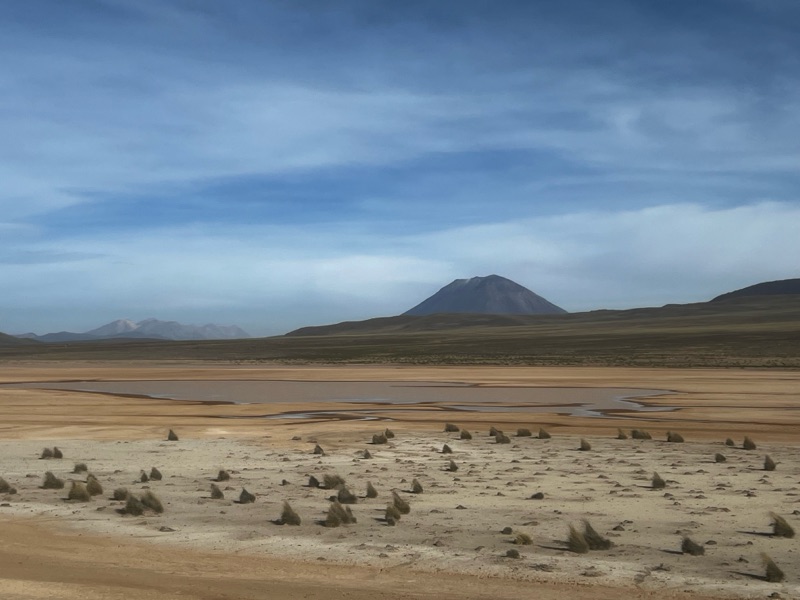
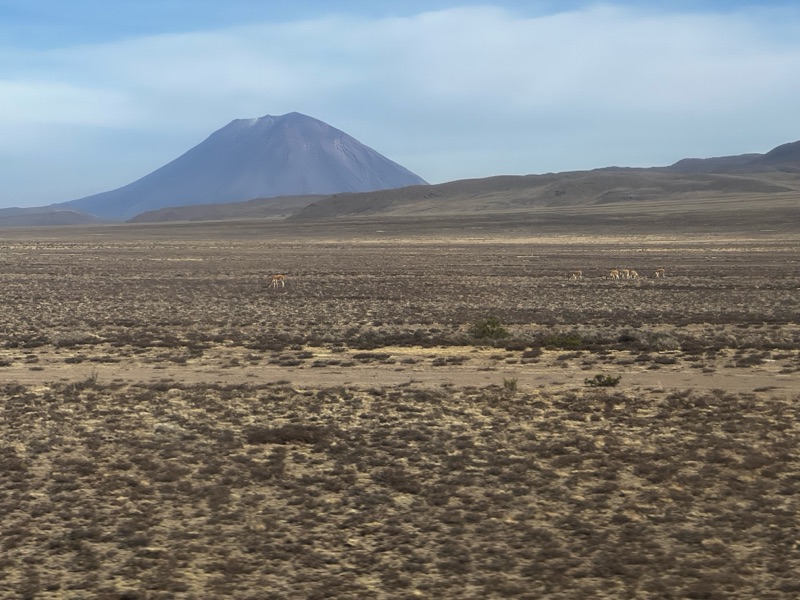
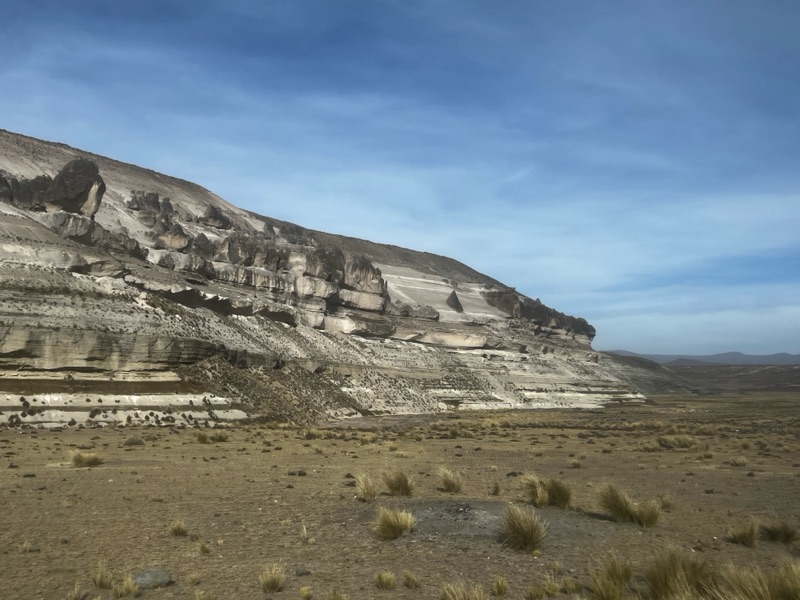
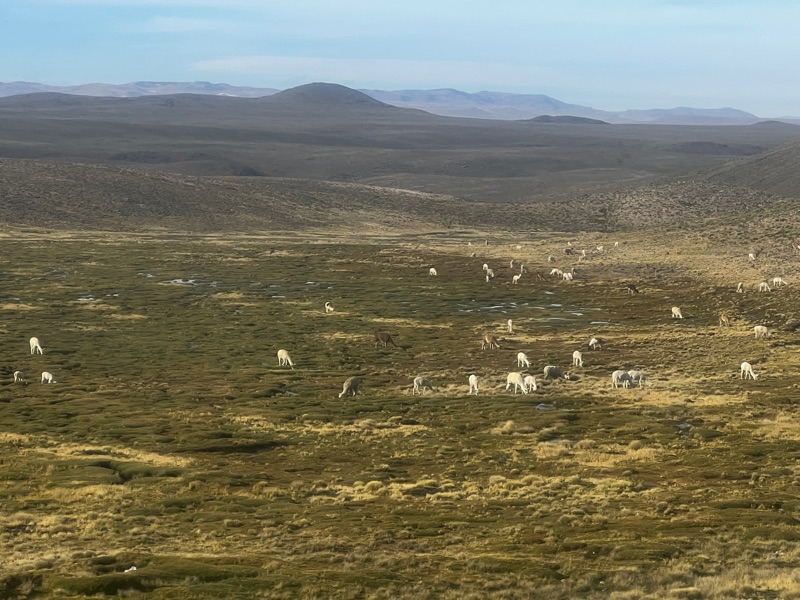
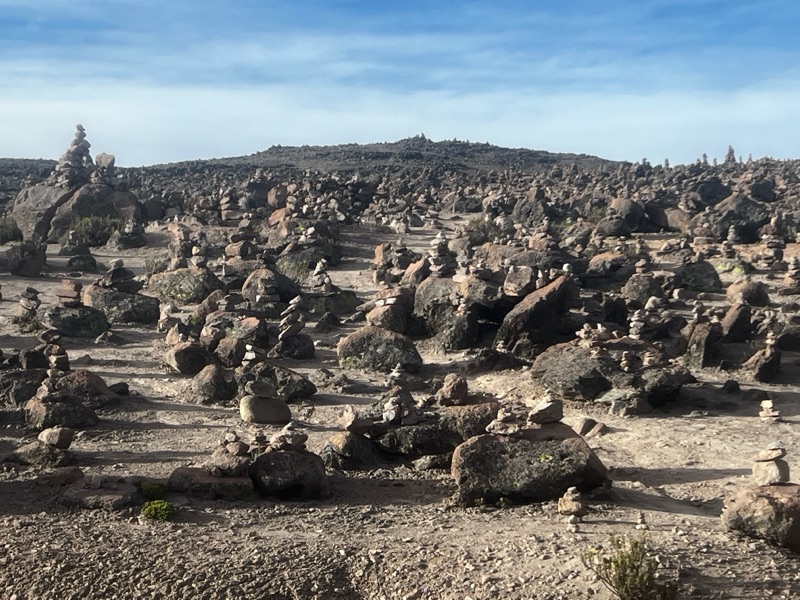
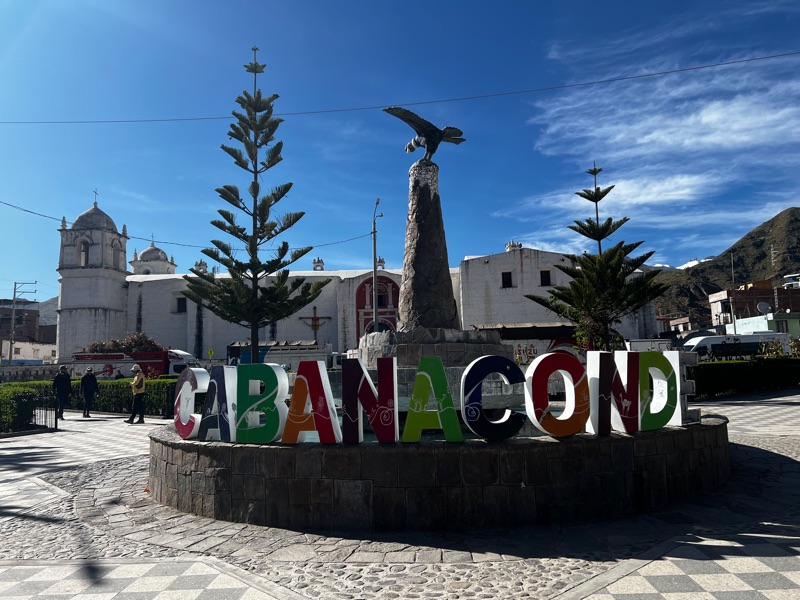
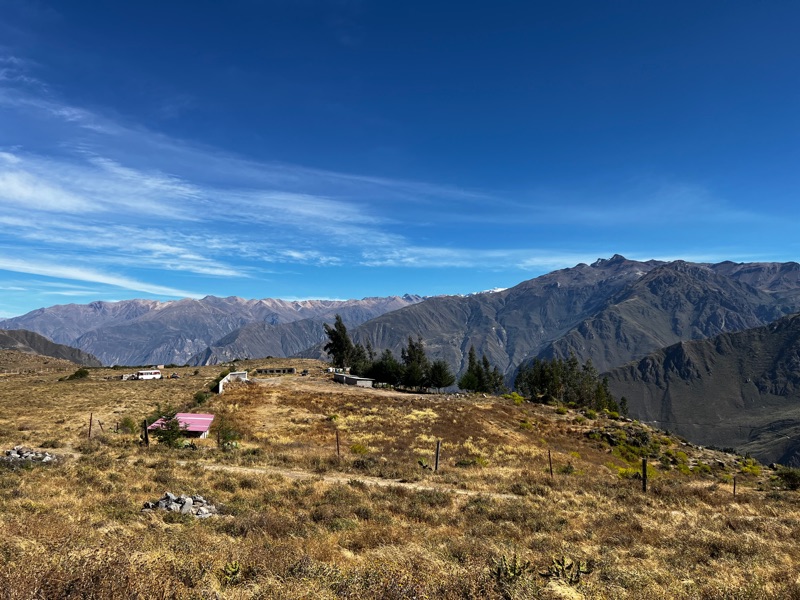
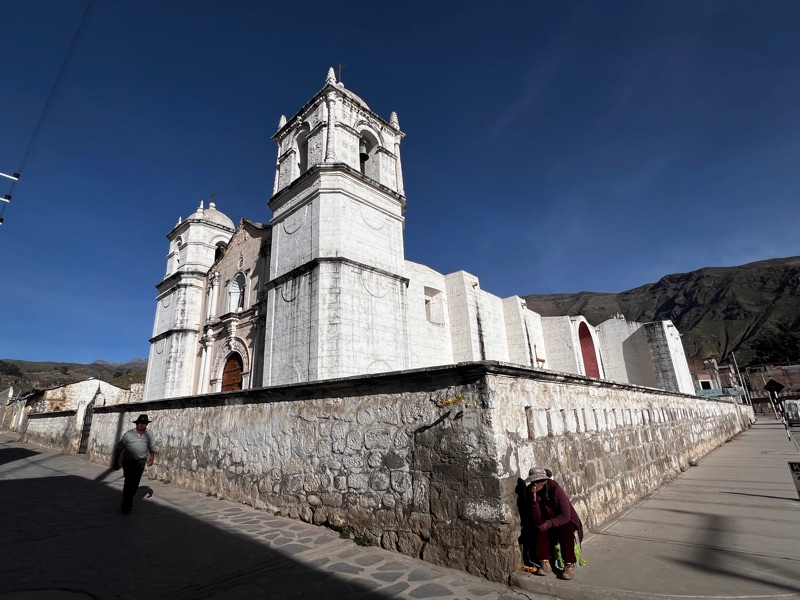
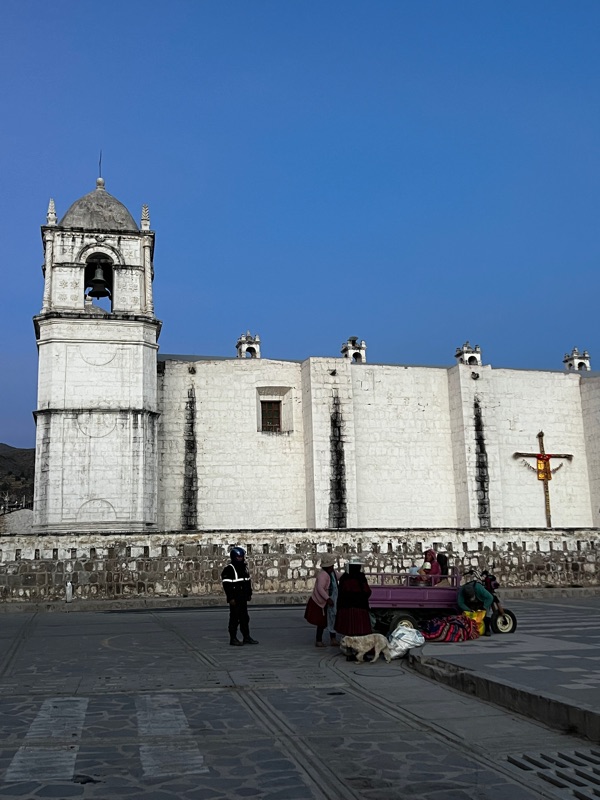
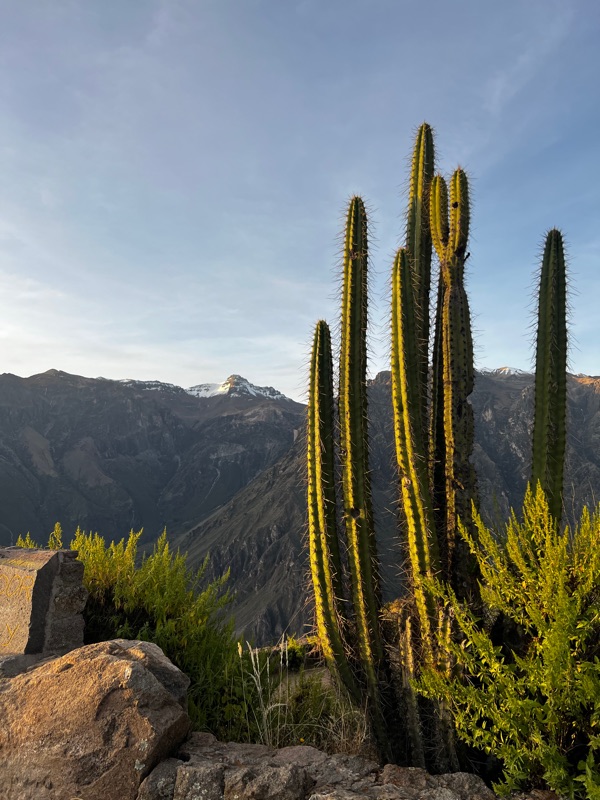
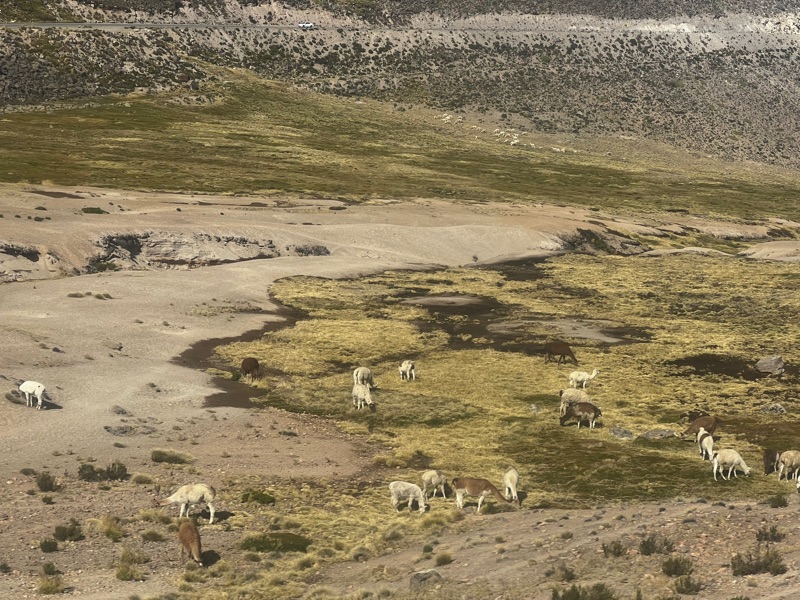
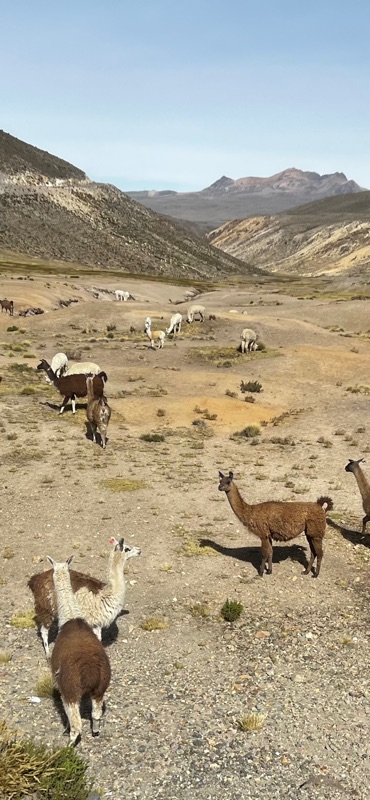
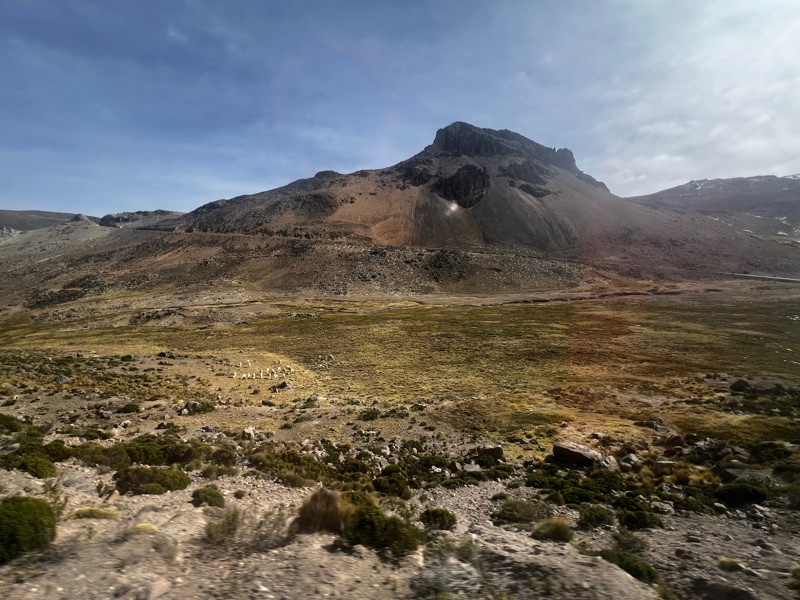
Arequipa to the Colca Canyon: All part of the ‘gringo trail’ is a visit to the Colca Canyon, twice as deep as the Grand Canyon and home to the largest of birds, the Condor. Our options are, take a tour; pick up at 3am and be taken to the photo op locations or do it proper over a few days. Either way, the journey to the heart of the canyon from Arequipa was 6hrs! So we boarded with 1/2 a plan of where we mights stay to break the journey and braced ready for numb bums! Soon after leaving the city, the landscape was once again spectacular and an utter contrast to what we had seen in and around Cusco. We were aiming to reach a mountain town at the entrance to the canyon until the driver persuaded us to go all the way to a tiny rural village of Cabanconde where all the trekking starts and more importantly the tour buses don’t get to. Gaining altitude to barren areas of permafrost in an utterly barren ‘moon-like’ landscape ringed with snow-capped mountains, it was spectacular! Our faces pinned to the windows throughout spotting Alpaca, Vicuna and Llamas wandering and congregating at the odd watering hole. Little mountain villages, crazy-rock formations, agricultural terraces and all different types of cacti. We arrive after dark so have no real idea of where we’ve ended up.
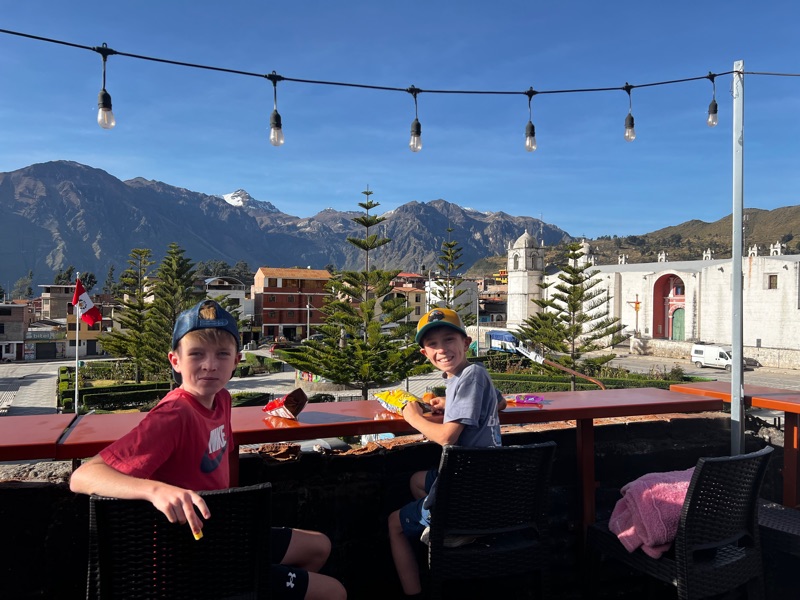
On arrival we once again rummaged quickly to find our hats and scarves and aim for the one hostel we’d read about. No room at the Inn!… but after quickly dumping our packs somewhere else we returned to their cosy restaurant. With the warmth of the pizza oven keeping a friendly buzz alive with backpackers from all over the world, we tucked into the best pizza we’d had for months.
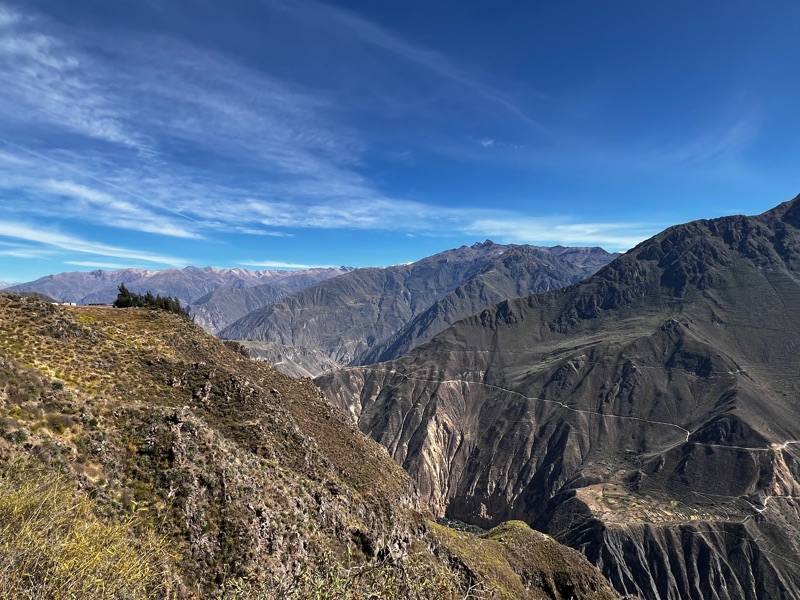
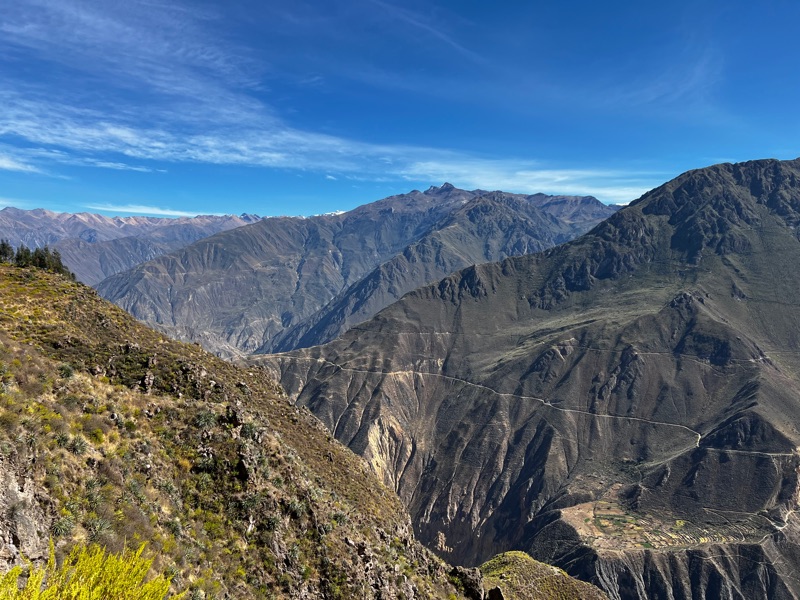
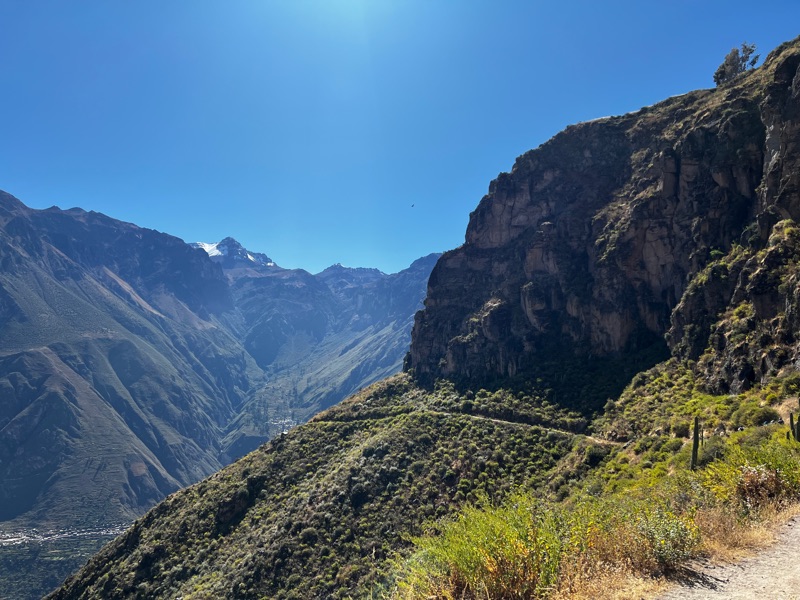
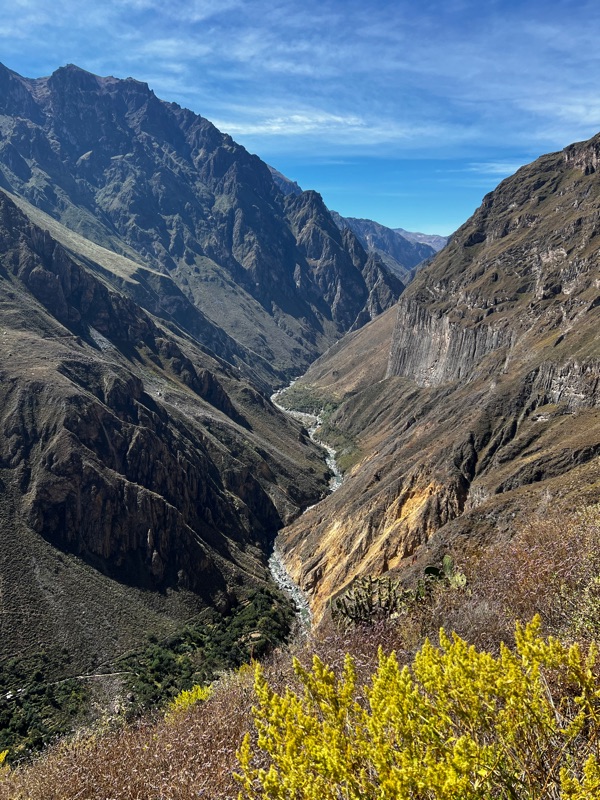
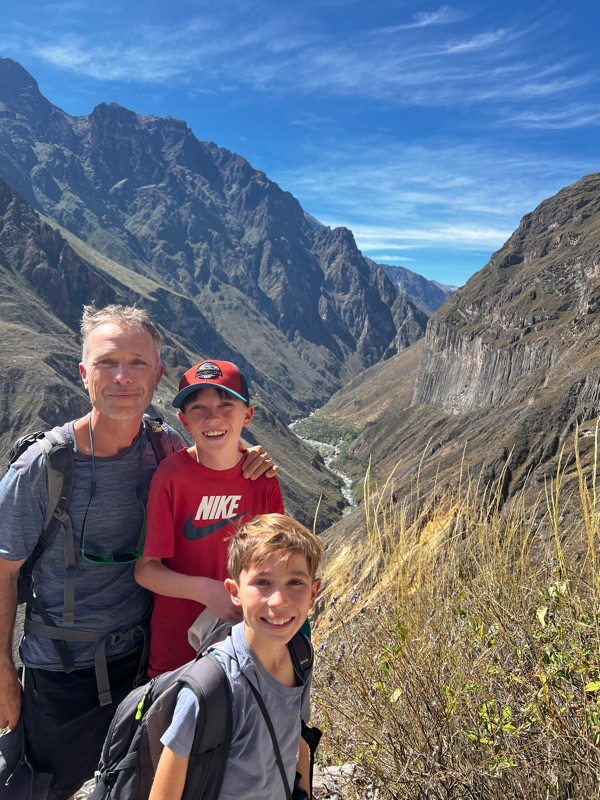
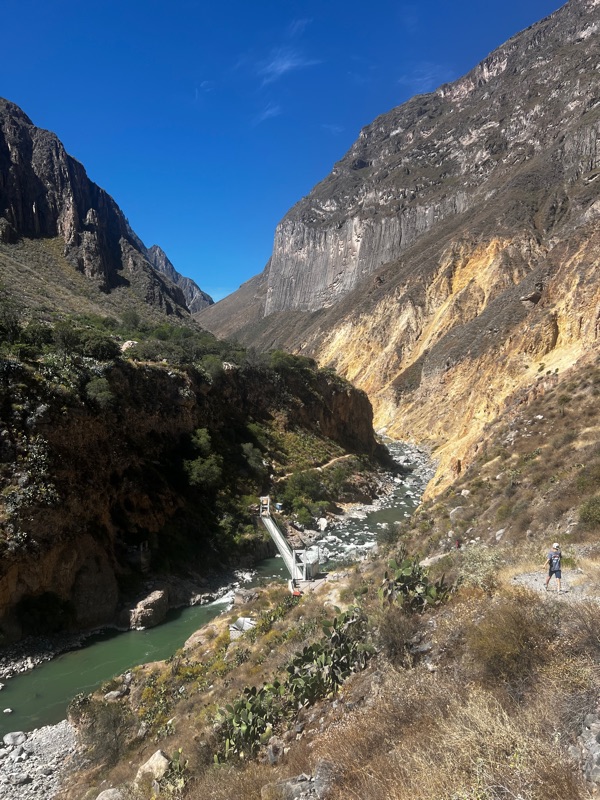
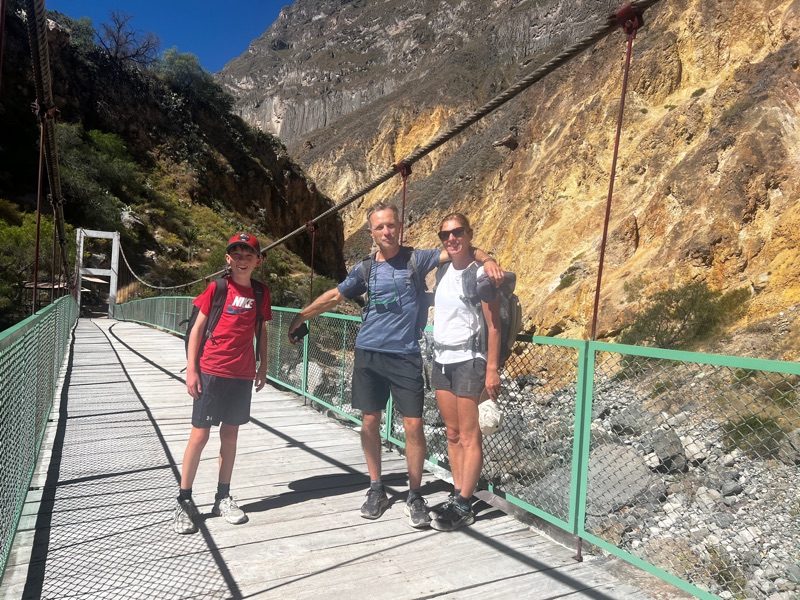
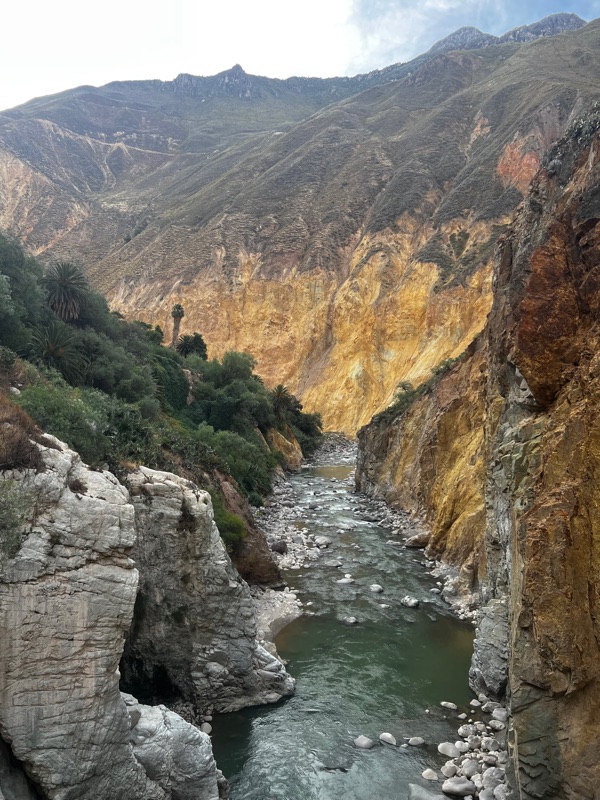
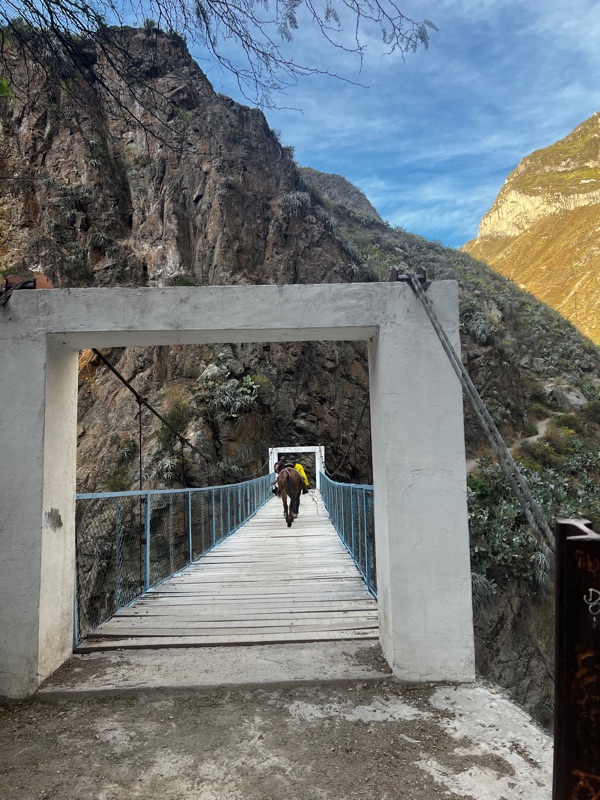
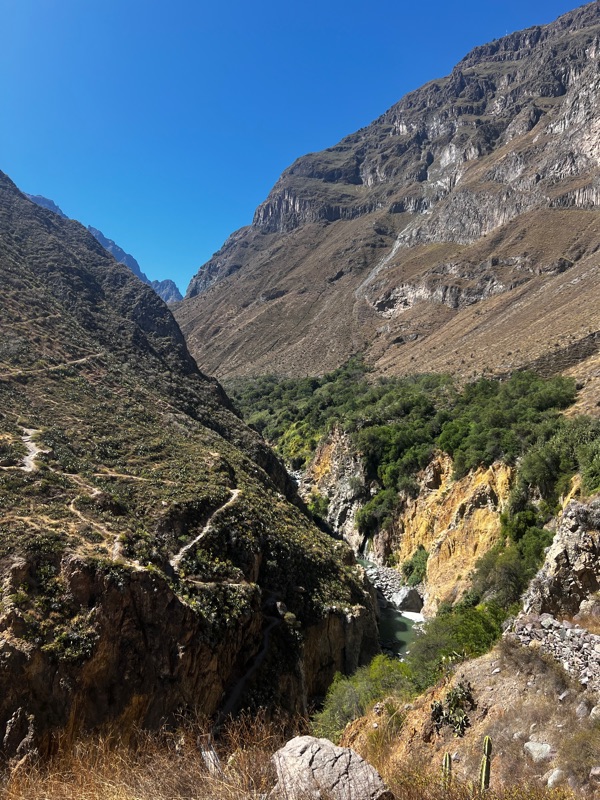
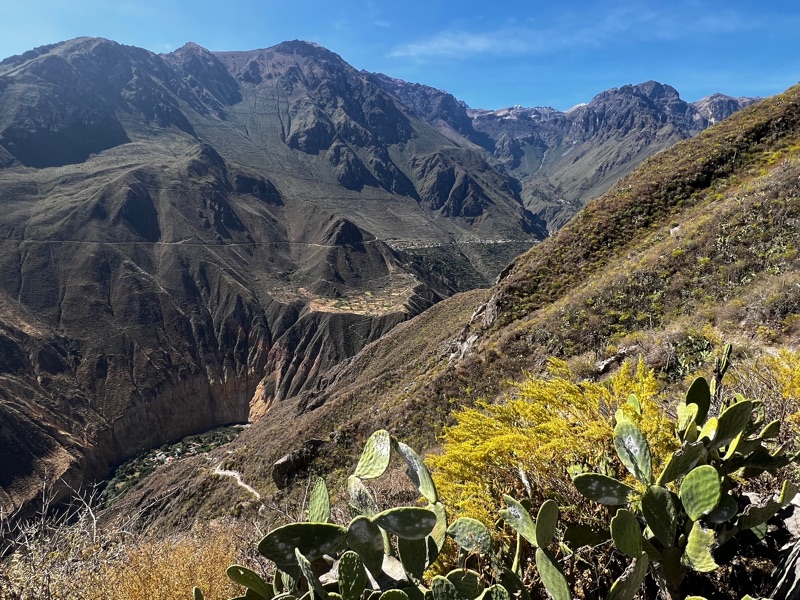
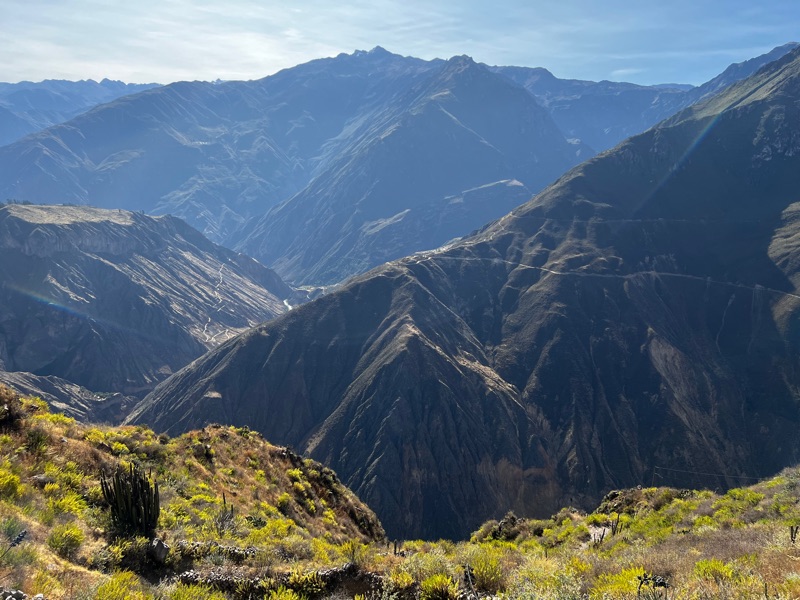
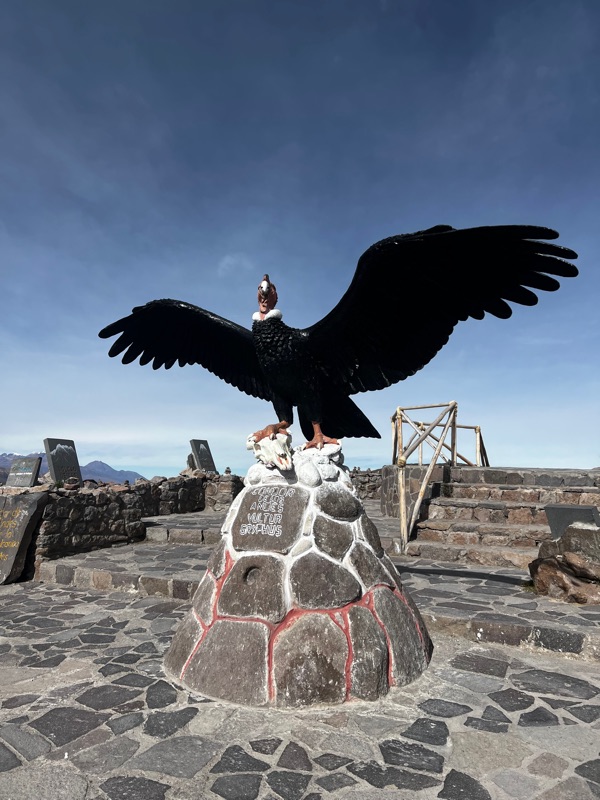
The service also came with all the info needed for self guided treks, so after some deliberation and after previously agreeing we’d only do some short treks, we decided to do 20km, 2 day loop down into bottom of the canyon, 1200 metres down 😳. Decant to day packs with the bare essentials we head off the next morning. The walk was long and hard on the old knees, but truly incredible with views of soaring Condors above us.
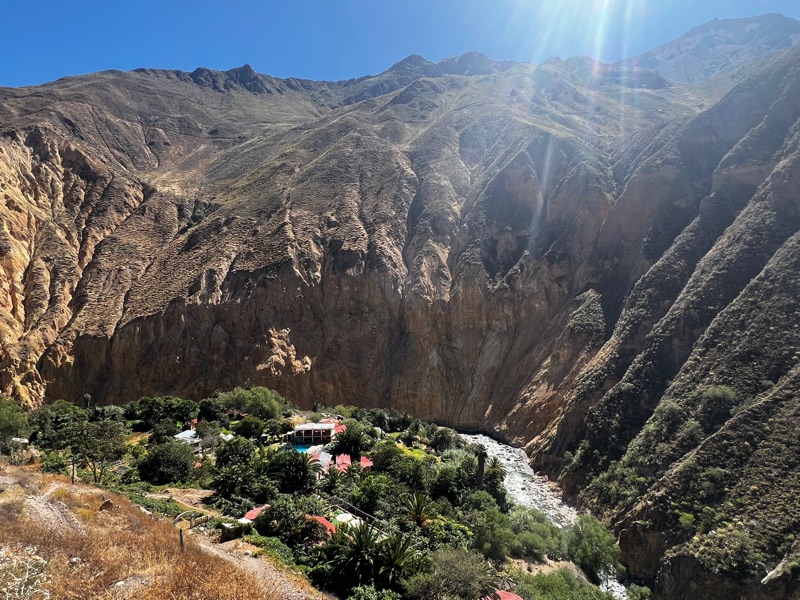
After a long morning hike down a mountain, then up, along and down a bit 😳, we made it to the little oasis village, Sangaille.
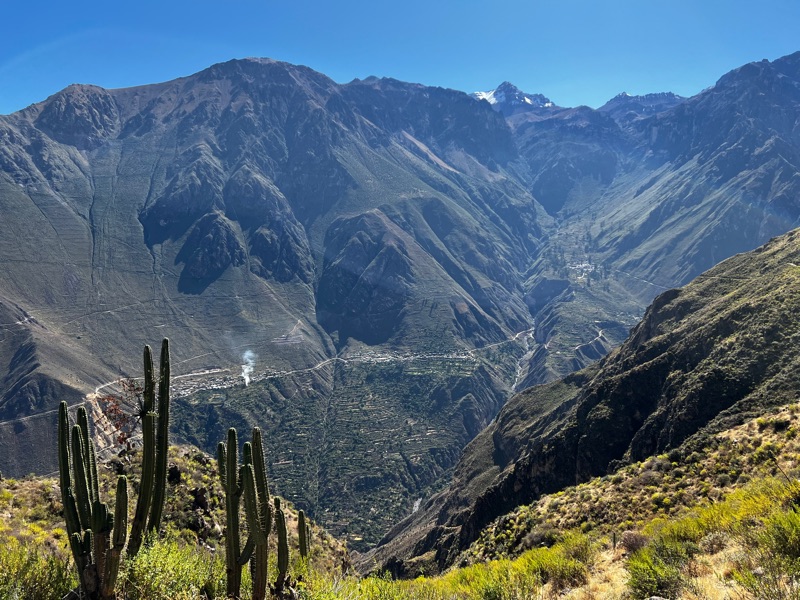
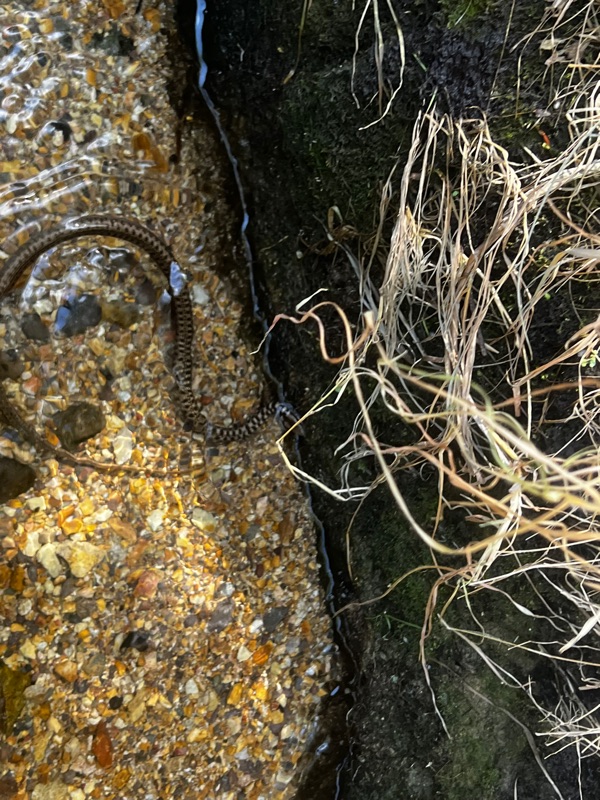
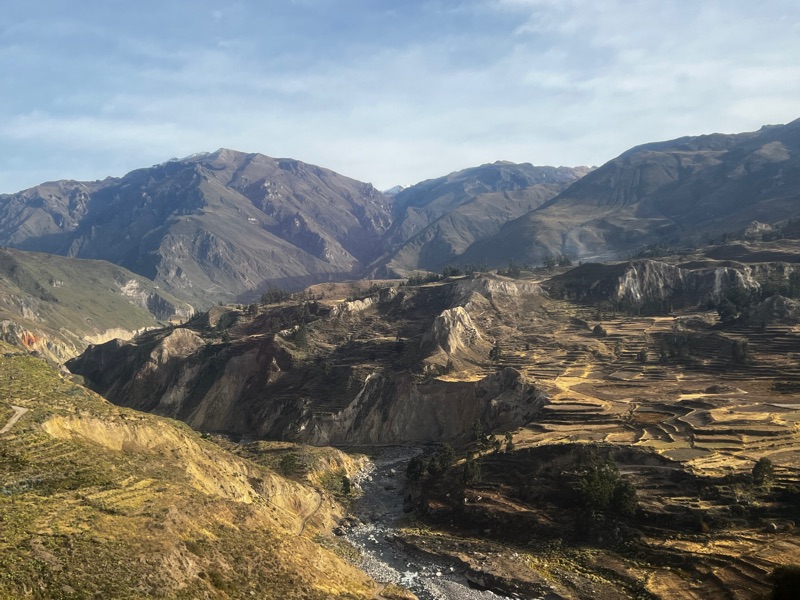
Canyon life is sustained through agriculture carved into the canyon sides on terraces built over centuries and in ever decreasing size as the canyon closed in further down the river, but each with a valuable crop of Avocado, Banana, Papaya, Lime. Each terrace fed by a network of man made irrigation channels winding along the hillside from springs fed by mountain melt water. (We even rescued a snake from one as it struggled to escape the stream).
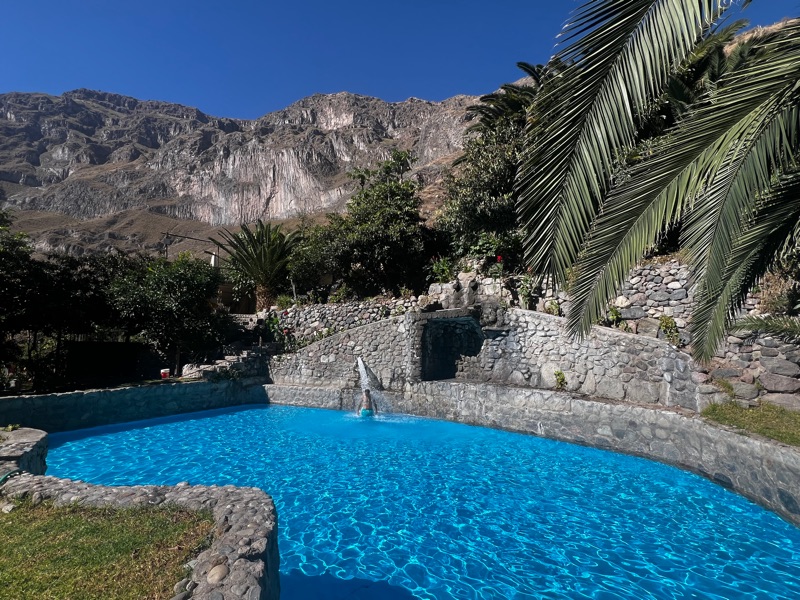
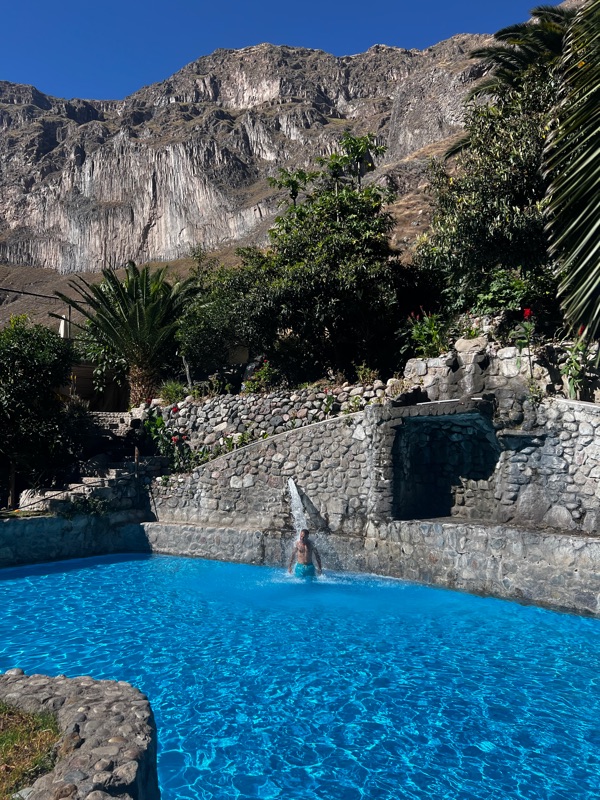
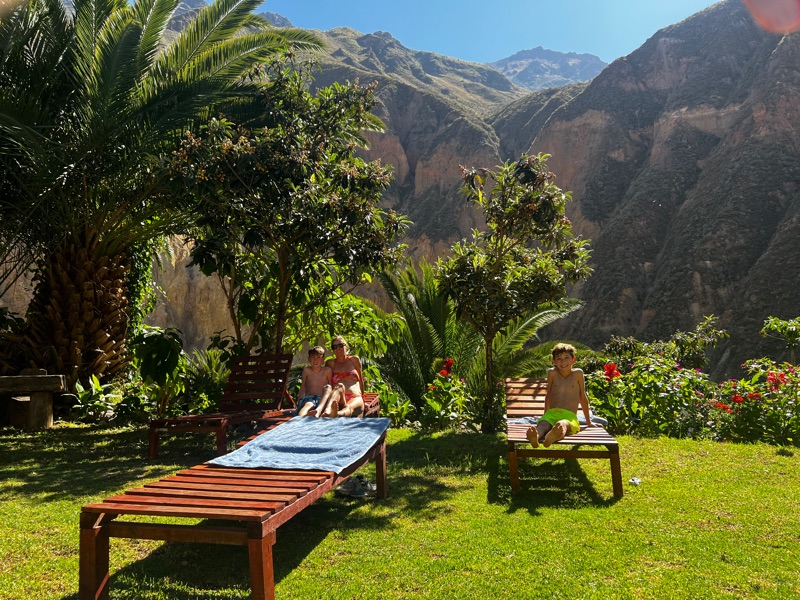
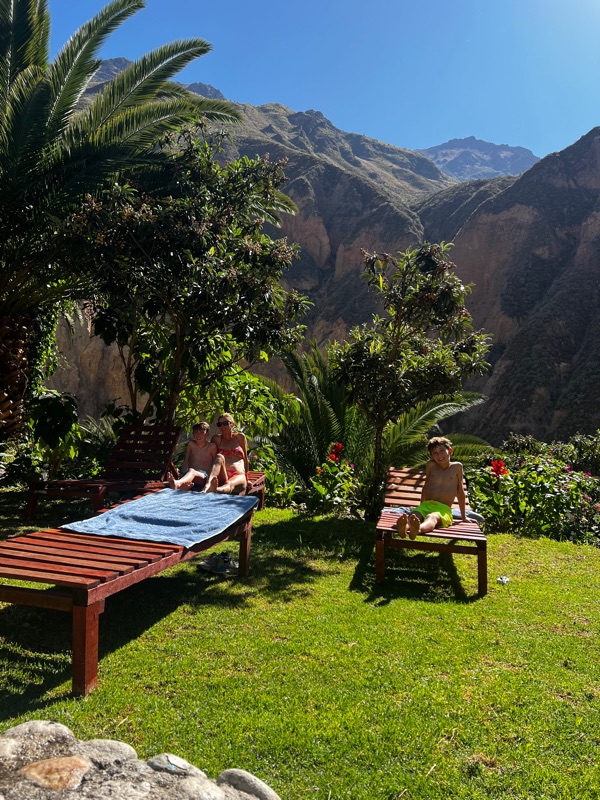
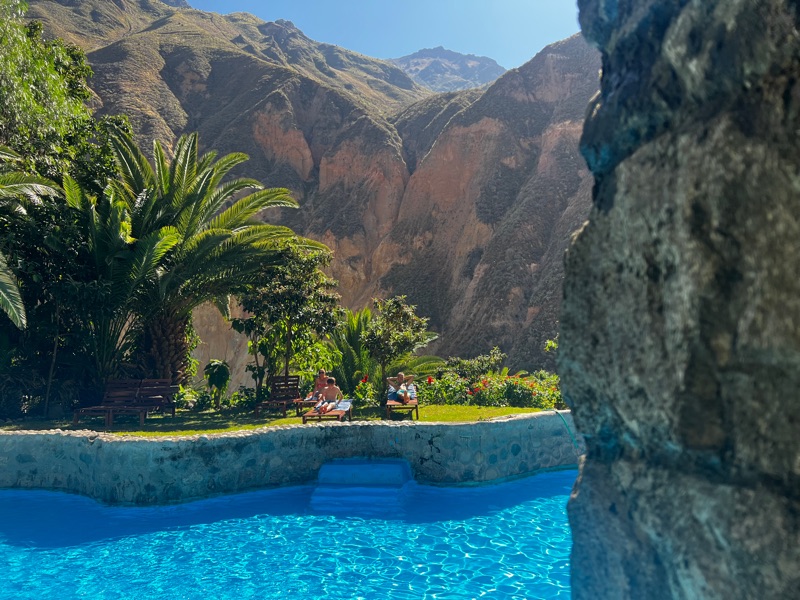
Our stay was a tiny village on a natural plateau forming a stunning oasis with palm and fruit trees. It was truly incredible not only because of its position at the bottom of a canyon; accessible only by foot, but because these incredibly resourceful Peruvian villagers have managed to cater for tourists. They have even managed to build freshwater swimming pools, refreshed constantly by the freshwater spring pouring into them!
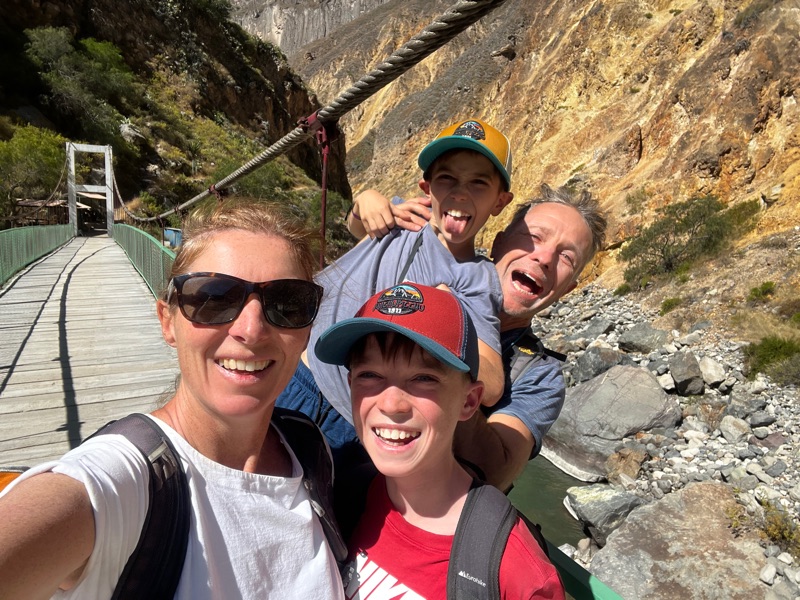
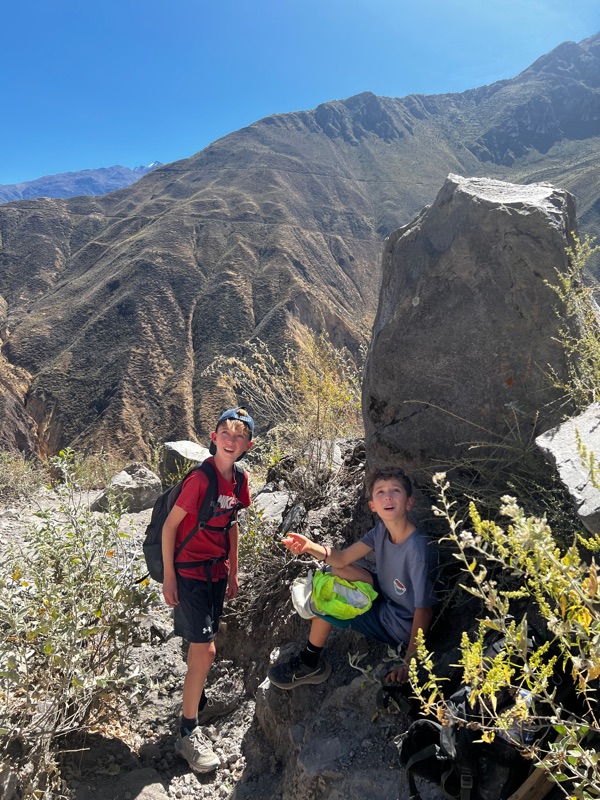
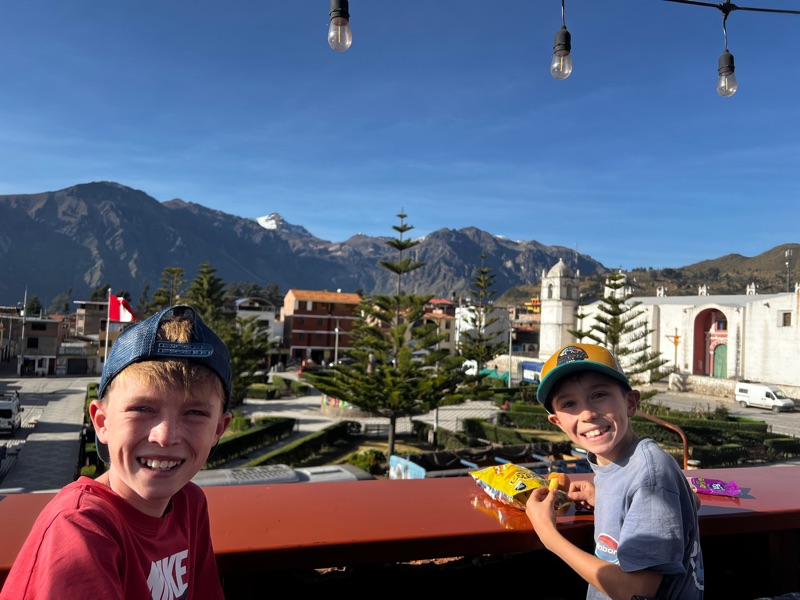
We enjoyed the swimming pool for a few hours only to realise that it gets darn-hot, darn-early and we still had to climb back up to Cabaconde, where we started 😳. So like true brits, we started hiking at 11am in the full-sun! Needless to say the walk was spectacular but a real, hard, hot challenge and the climb-up never seemed to end…. 5 litres of water, and many, many bribes of chocolate bars, sweets and Nintendo time later - we did it! we finally got to the top…”boys, are you glad you did it….YES”! 🏆


Comments
Post a Comment